
Can You Claim On A Settled PCP Agreement?
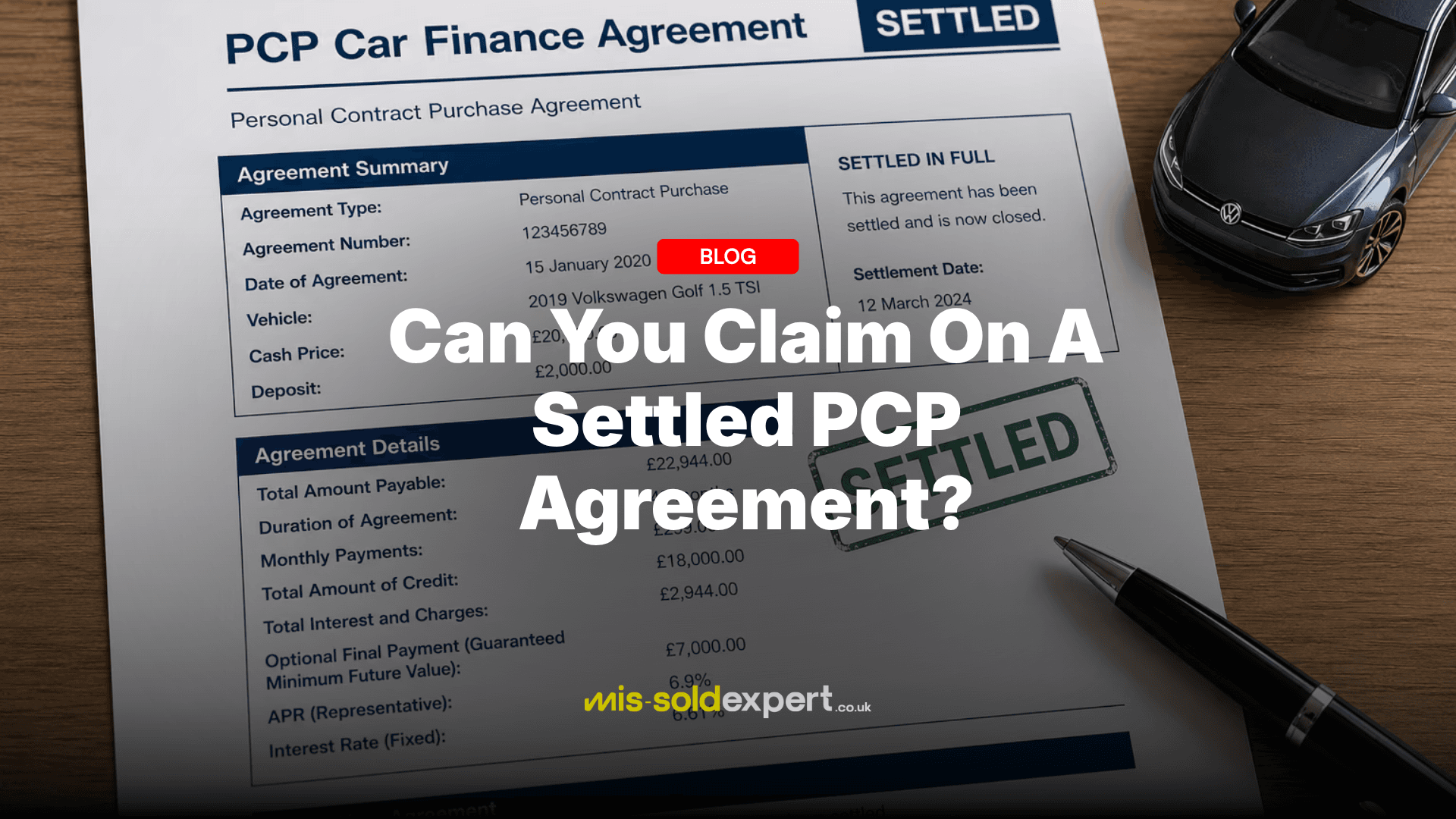
Many Drivers Think A Finished Finance Agreement Cannot Be Reviewed
One of the main misunderstandings surrounding the FCA motor finance redress scheme is the belief that a complaint can only be raised while the finance agreement is still active.
In reality, many consumers are now reviewing car finance agreements that were settled years ago. Some paid the agreement in full and kept the vehicle. Others returned the car at the end of the term, refinanced the balance, or part-exchanged the vehicle into another finance deal.
Despite this, settled PCP agreements may still fall within the FCA’s compensation framework if the agreement was arranged during the period affected by historic commission structures.
As awareness around the FCA redress scheme has increased, many drivers are revisiting older PCP agreements to better understand how the finance was originally arranged and whether important information about commission or borrowing costs was disclosed clearly at the time.
In This Post
In this post, we'll cover:
- Whether you can make a claim on a settled PCP agreement
- Why older car finance agreements are being reviewed
- What the FCA's redress scheme means for historic PCP finance
- What questions consumers are now asking about settled agreements
- What to do if you've lost your original finance paperwork
- How to raise a complaint and what happens next
Ready to see if you could make a claim? Start your free enquiry today.
What Is A Settled PCP Agreement?
A settled PCP agreement simply means the finance contract has already ended.
This could happen because the customer reached the end of the agreement and paid the final balloon payment to keep the vehicle. In other situations, the vehicle may have been returned to the finance company or used as part-exchange against another agreement.
Some agreements were also settled early before the original finance term ended.
The agreement itself may still be relevant even if the vehicle was sold years ago, the balance was cleared early, or the customer no longer owns the car connected to the finance deal.
Many consumers are now reviewing agreements signed long before the FCA investigation became public knowledge.
Why Older PCP Agreements Are Being Looked At Again
The FCA investigated discretionary commission arrangements used throughout the UK motor finance market before January 2021.
These commission structures allowed some dealerships and brokers to influence the interest rate attached to a customer’s finance agreement within limits set by the lender.
In some cases, increasing the customer’s interest rate could increase the commission earned by the dealership arranging the finance.
The FCA later concluded that these arrangements created conflicts of interest and increased the risk of unfair outcomes for consumers. As a result, discretionary commission arrangements were banned in January 2021.
The regulator has now formally announced a motor finance redress scheme covering agreements where consumers may have suffered financial loss because of unfair commission arrangements between 2007 and 2024.
This means many older PCP agreements that have already ended may still fall within the scope of the compensation framework.
Why PCP Finance Became So Widespread
PCP agreements became one of the most common ways to finance vehicles in the UK during the 2010s.
For many drivers, the structure made newer cars appear more affordable because monthly repayments were often lower than traditional finance agreements.
However, PCP finance could also become more complicated than many consumers realised at the time.
A typical agreement often included fixed monthly payments alongside mileage restrictions and a final optional balloon payment at the end of the term. Consumers could then choose whether to keep the vehicle, return it or use it towards another finance agreement.
Many drivers reviewing settled PCP agreements now say they concentrated mainly on whether the monthly payment suited their budget rather than understanding the total borrowing cost across the agreement term.
Others say they did not fully understand how interest charges, commission arrangements or final balloon payments affected the agreement overall.
Can You Still Raise Concerns If The Agreement Ended Years Ago?
Yes. A finance agreement may still be relevant even if it ended several years ago.
The FCA’s compensation framework focuses on how agreements were arranged and whether consumers received enough information about commission structures and borrowing costs at the point the finance was sold.
This means the age of the agreement does not automatically prevent consumers from reviewing it.
Many people only became aware of the FCA investigation long after their finance agreement had already ended. Some consumers are now looking back at agreements signed more than a decade ago to better understand how the finance process worked and whether important information was disclosed clearly at the time.
What Consumers Are Now Questioning About Settled PCP Agreements
Not every PCP agreement will have been mis-sold, and outcomes depend on the circumstances of each case.
However, many consumers reviewing settled agreements have raised similar concerns.
Some drivers now question whether commission arrangements should have been explained more clearly or whether the dealership could influence the interest rate attached to the agreement. Others believe lower-rate finance options may have existed but were never discussed during the sales process.
Some consumers say dealership conversations focused heavily on monthly affordability rather than the total repayable amount or the long-term financial commitment attached to the agreement.
For many people, the wider issue is not simply the existence of commission itself. It is whether enough information was provided for consumers to make a properly informed financial decision at the time.
What Information Should Consumers Have Received?
Under FCA rules, firms are expected to communicate information in a way that is clear, fair and not misleading.
Consumers should have understood the interest rate attached to the agreement, the total repayable amount and how the PCP structure operated overall. This included understanding any final balloon payment, mileage restrictions, optional extras and vehicle return conditions.
Where commission arrangements were relevant, firms were expected to communicate this fairly and transparently.
Many consumers now say they did not fully understand how the finance agreement worked at the point they signed the paperwork.
The FCA’s compensation framework is partly focused on whether consumers received enough information to make informed borrowing decisions before entering the agreement.
What If You No Longer Have The Original Paperwork?
Many consumers reviewing older PCP agreements no longer have every document linked to the original finance deal. This is especially common where agreements ended years ago.
Useful documents can include finance agreements, APR details, settlement figures, payment schedules and emails linked to the dealership sale. However, not having every document does not necessarily mean the agreement cannot still be reviewed.
Some consumers begin by contacting the lender directly to request copies of historic finance records or agreement information.
The FCA has also published guidance explaining how consumers can raise complaints and what information firms may request during the process.
Could Consumers Receive Compensation On Settled Agreements?
The FCA’s redress scheme is designed to compensate consumers who may have suffered financial loss because of unfair commission arrangements.
Compensation is not automatic, and outcomes will depend on the details of the agreement involved.
The regulator has indicated that decisions may depend on whether commission arrangements were disclosed properly, whether consumers paid more interest than necessary and whether the agreement created unfair outcomes overall.
The wider compensation process remains subject to implementation timelines and any further legal developments linked to the scheme.
What Happens Next Under The FCA Redress Scheme?
The FCA introduced temporary measures while reviewing discretionary commission arrangements across the motor finance industry.
These measures allowed lenders more time to respond to complaints as firms prepared for higher complaint volumes and wider regulatory decisions.
The FCA has confirmed that normal complaint handling deadlines will return from 31 May 2026.
If you believe your car finance agreement may have been affected, you do not need to wait before contacting your lender.
The FCA has also published guidance on how firms should handle complaints during the redress process.
As lenders prepare for increased complaint reviews and compensation assessments, many consumers are now looking again at settled PCP agreements to understand how those agreements were arranged.
Can You Raise A Complaint Yourself?
Yes. Consumers can complain directly to lenders free of charge.
Some consumers prefer to manage complaints independently, while others seek support reviewing finance paperwork and handling communications with lenders.
If you prefer support with the process, Mis-Sold Expert can assist with reviewing your agreement and communicating with the lender on your behalf.
Using a claims management service is optional, and consumers can always contact lenders directly free of charge.
Why Settled PCP Agreements Still Matter
The FCA’s motor finance compensation framework has changed the way many consumers view older car finance agreements.
For years, dealership finance became a routine part of buying a vehicle. Agreements were often completed quickly alongside discussions about servicing plans, optional extras, GAP insurance and part exchange values.
Many consumers now say they focused mainly on whether the monthly repayment suited their budget rather than understanding how commission arrangements operated behind the scenes.
Following the FCA’s announcement of its redress scheme, many drivers are now revisiting settled PCP agreements to better understand whether important information about borrowing costs and commission arrangements was disclosed clearly at the time.
You can claim without using a claims management company; you can go to your finance provider and then to FOS, for free. Additionally, the FCA is introducing a free consumer redress scheme.
Ready to see if you could make a claim? Start your free enquiry today.